
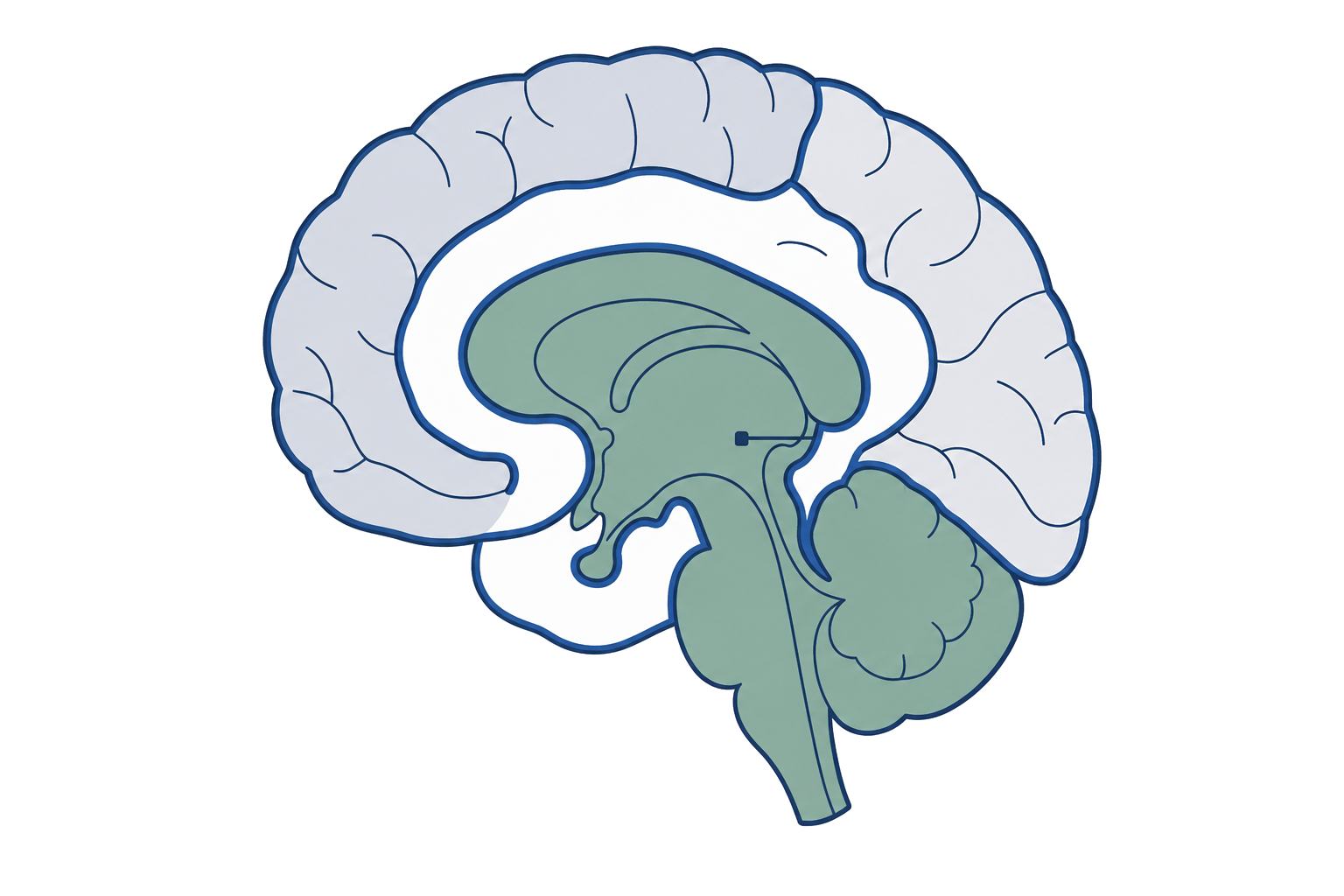
Memory drops between sessions
Students can look fine in the moment and still lose key ideas by the next study block.
BrainMaxLearn reads study behavior, memory state, and progress patterns so the platform can guide the next action without making the learning experience feel heavy.
Many platforms focus on content delivery and completion counts. That leaves memory, timing, and support signals out of the picture.
Students can look fine in the moment and still lose key ideas by the next study block.
Static reminders do not account for how quickly each learner forgets.
Finishing a lesson is not the same as being able to recall and use it later.
Teams often notice weak areas after the gap has already widened.
Learners are left guessing whether to revise, practice, or move on.
Core vision
BrainMaxLearn studies how a learner behaves, what they forget, and where they need support, then adjusts the experience around that reality.
Each learner gets customized paths, topic-wise guidance, and adaptive difficulty levels.
The platform focuses on recall, revision timing, and the long-term retention curve.
Learning speed, practice patterns, time spent, and confidence signals are all interpreted together.
Repeated mistakes, low-confidence concepts, and slow-moving topics are surfaced early.
The workflow is simple on the surface: start a topic, observe what happens, and let the platform decide what should happen next.
The learner opens a topic or goal and begins the session from a guided entry point.
The system watches time spent, accuracy, focus, and study consistency while the learner works.
AI checks which ideas are stable, which ones are weak, and what needs more attention.
BrainMax recommends revision, practice, summaries, quizzes, or a lighter next step.
The next session is shaped by what was learned earlier, so retention keeps building over time.
These are the main systems that power BrainMax from the inside.
Adjusts difficulty, question complexity, and practice style as the learner changes.
Tracks recall strength, forgetting curve movement, and retention decay.
Schedules review cycles, recall tests, and practice reminders at the right moment.
Explains concepts, solves doubts, generates summaries, and suggests the next study step.
These entry points keep the homepage focused while pointing to the most useful sections.
See how the platform moves from topic start to adaptive action.
Review the engine, memory logic, revision system, and AI mentor.
Look at the models, APIs, and backend that support the experience.
Check the groups and environments that BrainMax can serve.
The platform can be shaped for different learning groups, not just one kind of user.
Useful when large groups need a more visible and measurable learning flow.
Helpful for high-pressure preparation where timing and recall matter a lot.
Fits teams that need focused upskilling and structured retention support.
Supports programming, AI/ML, and professional training journeys.
Helps instructors see weak areas, pace, and support needs more clearly.
Works as a testbed for adaptive education and cognitive learning experiments.
BrainMax stays easy to use while combining AI models, memory tracking, analytics, and secure product delivery underneath.
Traditional tools push content. BrainMax pays attention to memory, timing, and the learner's next action.
Built to follow memory, mastery, and progress outcomes instead of just clicks.
Signals are shown in a way that makes the next action easier to understand.
Designed to move from a single learner workspace to larger deployments.
Inspired by memory science, adaptive education, and performance prediction.